

Alternative Fuels: Integrating CO₂ Utilisation and Hydrogen for a Circular Carbon Economy
Alternative fuels in hard-to-abate sectors
Applications, policies and market dynamics
The UK possesses exceptional natural advantages and infrastructure for alternative fuel development; a strong offshore wind sector, growing infrastructure for hydrogen production and carbon capture and the engineering skills base to deliver the opportunity.
By investing strategically and aligning policy, the UK can accelerate adoption of sustainable fuels across key sectors, support integrated supply chains and encourage innovation. Coordinated efforts between industry and government will help realise export opportunities, create job, and advance net zero goals while maintaining global energy leadership. This overview sets out the current landscape — including sector-specific fuel applications, evolving policy mechanisms and the market dynamics shaping deployment and investment.
Overview
Maritime industry
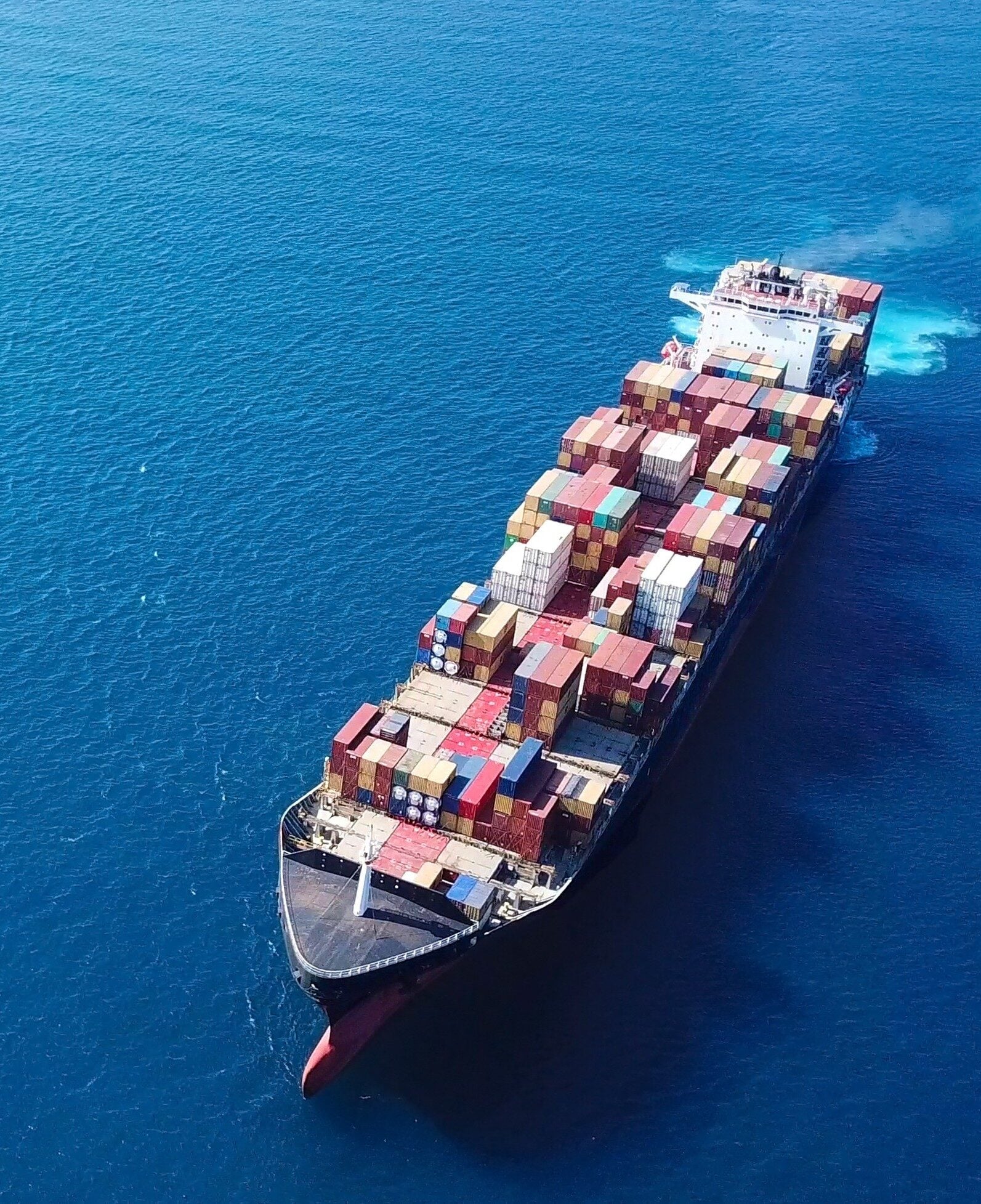
In April 2025, the International Maritime Organisation (IMO) approved new measures to reduce greenhouse gas emissions, aiming for net zero by around 2050. The roadmap includes interim targets of a 20–30% reduction by 2030 and 70–80% by 2040, compared to 2008 levels. These regulations, combining global fuel standards and greenhouse gas pricing, are set to take effect in 2027.
The UK’s Maritime Decarbonisation Strategy, published in 2025, mirrors the highest levels of international ambition. It targets zero lifecycle emissions from domestic maritime by 2050, with interim goals of at least a 30% reduction by 2030 and 80% by 2040 from 2008 levels. UK domestic maritime currently emits around eight million tonnes of CO₂ equivalent per year, about 5.5% of total UK domestic transport emissions.
Methanol is leading the transition to alternative marine fuels, with rapid growth in both vessel orders and production. As of April 2024, 251 methanol-capable vessels were in operation or on order globally. By April 2025, the Methanol Institute was tracking 236 renewable methanol projects worldwide, including 220 renewable and 16 low-carbon projects, with a projected combined capacity of 47.2 million tonnes by 2030.
Policy and Regulatory Mechanisms
Maritime decarbonisation strategy
The maritime sector is emerging as a critical frontier for the adoption of alternative fuels, driven by its significant contribution to global emissions and the urgent need for decarbonisation. The current UK maritime decarbonisation strategy focuses on five key areas: regulating the greenhouse gas intensity of fuels, emissions pricing through the UK Emissions Trading Scheme (ETS), decarbonising ports and reducing emissions at berth, supporting small vessels, and improving energy efficiency.
Expanding the UK ETS to include maritime marks a major policy shift. From July 1, 2026, the UK ETS will include coverage of all domestic journeys and all in port emissions in the UK. Additionally and unlike many carbon pricing mechanisms that focus solely on CO₂, the UK maritime ETS will include methane and nitrous oxide emissions, providing comprehensive coverage of maritime greenhouse gases.
The scheme incentivises alternative fuel use by imposing carbon costs on conventional marine fuels while potentially exempting or favouring low-carbon alternatives. It supports the rollout of renewable maritime fuels, particularly those qualifying under the expanded Renewable Transport Fuel Obligation framework.
Overview
Aviation industry
The aviation sector is another key developing market for alternative fuels. Sustainable aviation fuel (SAF) is chemically similar to conventional jet fuel and fully meets performance and safety standards for aviation. SAF is a broad term that encompasses multiple types of low-carbon aviation fuels, which can be divided into two main classifications: bio-based fuels and synthetic e-fuels. Bio-based SAF feedstocks consist of biological sources. Synthetic aviation fuels, also known as ‘e-fuels’ consists of synthesising hydrocarbons from renewable-electricity produced hydrogen and captured CO2.
SAFs can be blended in varying ratios with fossil-based kerosene for use in current engines. Given their “drop in” nature, airport infrastructure is unaffected by the use of SAF. They must also meet strict sustainability criteria, often defined by international standards such as the International Civil Aviation Organisation’s CORSIA scheme or the EU Renewable Energy Directive, ensuring feedstocks do not compete with food, negatively impact biodiversity, or violate human rights.
The UK SAF Mandate, which became law in November 2024 and took effect January 1, 2025, provides a pathway to decarbonisation for the aviation sector. The mandate stipulates that an increasing portion of the UK jet fuel demand must be met with sustainable fuels, 2% in 2025, increasing linearly to 10% in 2030 and reaching 22% by 2040. From 2040, the obligation plateaus until greater certainty emerges regarding SAF supply capabilities.
Policy and regulatory mechanisms
Sustainable aviation fuel mandate
The SAF Mandate has two obligations – the ‘main obligation’ which relates to delivering the increasing portion of SAF to 2040, and a ‘power-to liquid obligation’. It primarily covers three fuel types: Hydroprocessed esters and fatty acids (HEFA), Power-to-liquid fuels (PtL), and other waste-based fuels.
The power-to liquid obligation which will come into force in 2028 is designed to accelerate the development of power-to liquid fuels, which are less reliant on scarce feedstocks. By providing a sequenced implementation of the power-to-liquid obligation, the policy establishes increasingly ambitious targets while incorporating features to drive fuel diversification and technological innovation.
To further catalyse innovation in more advanced fuels and prevent reliance on existing biofuel supply chains, the SAF Mandate will also include a cap on the amount of hydroprocessed esters and fatty acids (HEFA) that can be used to meet the main obligation.

Power generation and heavy industry
Alternative fuels present crucial pathways for decarbonising sectors that are difficult to electrify directly. These fuels offer viable solutions for heat intensive industry such as cement and steel production and for distributed power applications, with potential to significantly reduce carbon emissions while maintaining operational reliability.
Distributed power generation and use includes applications where grid connectivity is a challenge such as islands communities who typically rely on diesel fuel generators or offshore operations where produced methane or bunkered diesels are common fuels.
For island communities, the ability to create and use their own fuels gives greater energy independence and synthetic fuels provide an option for decarbonisation. From an offshore operations perspective, a recent project delivered by NZTC and Siemens demonstrated the successful trial of running two existing gas turbines (the SGT-20 and the SGT-A35) using methanol as an alternative fuel with minimal modifications. These two types of turbines are deployed across approximately 25% of the offshore asset base and are estimated to contribute 45% of North Sea’s operational CO2 emissions.
These sectors are yet to receive mandated decarbonisation pathways, so there remains fundamental challenges in the uptake of alternative or low carbon fuels in this space including availability of fuels, costs and incompatibility with the UK emissions trading scheme (ETS).
Additional policy and regulatory mechanisms
UK policy provides long-term certainty for alternative fuel investors. The SAF Mandate offers 15-year target visibility through 2040, while the maritime decarbonisation strategy sets a clear path to 2050, with regulatory commitments starting in 2026-2027, creating a stable investment environment.
Maritime- and aviation-specific measures, outlined above, are supported by the Renewable Transport Fuel Obligation (RTFO). Introduced in 2008, the RTFO is the UK’s core policy for alternative transport fuels. It operates through a dual obligation system: a main obligation and a development fuel target. Suppliers meet obligations by redeeming Renewable Transport Fuel Certificates (RTFCs) or paying a fixed buy-out price per litre.
The RTFO also covers renewable fuels of non-biological origin (RFNBOs), such as hydrogen from electrolysis using renewable electricity. These fuels may qualify for RTFCs, and the RTFO’s core requirements apply.
However, gaps remain in sectors not yet addressed by current policy. Some industrial sectors under the ETS, such as offshore oil and gas, lack clarity on how biofuels could help reduce their Scope 1 emissions.
The UK Emissions Trading Scheme
The UK Emissions Trading Scheme (UK ETS) replaced the UK’s participation in the EU ETS on 1 January 2021, establishing a comprehensive “cap and trade” carbon pricing mechanism designed to drive the UK toward its net-zero by 2050 commitment.
The scheme represents approximately 25% of UK territorial emissions covering three primary emission areas. The current areas covered include energy intensive industries, the power generation sector and aviation, with plans to extend the scheme to cover domestic maritime emissions in 2026.
The SAF Mandate works in conjunction with the UK ETS to decarbonise aviation, while the Renewable Transport Fuel Obligation (RTFO) operates alongside the UK ETS but covers different transport modes. The RTFO covers road vehicles, non-road mobile machinery, and maritime applications for Renewable Fuels of Non-Biological Origin (RFNBOs).
Both the SAF mandate and the RTFO work on certificate schemes which provide operators a mechanism to offset total asset emissions through the UK ETS.
ETS impact on synthetic fuels uptake
Synthetic and biofuels currently face production costs 4-9 times higher than conventional fuels. Carbon pricing through the UK ETS adds additional cost pressures to conventional fuel users which can provide an incentive to switch to greener alternatives. However, the carbon price per tonne of CO2 emitted would have to increase considerably to offset the current green fuel cost premium.
A study completed by Apollo for the NZTC Energy Hubs projects considered the techno-economic feasibility of using hydrogenated vegetable oil (HVO) as an alternative biofuel for offshore power generation. It was initially assumed that the ETS penalty would offset the price premium for HVO, however the study found that the carbon price would have to be over £300/tonne CO₂ to bring price parity.
Additionally, the current ETS system only provides incentives for synthetic fuel use across the sectors covered by the RFNBO policy. There is no carbon price offset mechanism for synthetic fuel use within power generation or energy intensive industries regardless of fuel feedstock origin; only a carbon fuel zero-rating for biofuels.
Renewable Fuels of Non-Biological Origin
Renewable Fuels of Non-Biological Origin (RFNBOs) represent a critical intersection within UK carbon policy, playing a key role across several regulatory frameworks. These synthetic fuels are particularly valued for their potential to deliver significant greenhouse gas emissions reductions, making them an attractive option for decarbonising hard-to-abate sectors.
Under the Renewable Transport Fuel Obligation (RTFO), RFNBOs qualify for certificates through the development fuel target, which provides enhanced support due to their environmental benefits. This mechanism incentivises the production and use of advanced low-carbon fuels, ensuring RFNBOs have a defined place in the UK’s low-carbon fuel strategy.
RFNBOs also feature prominently in the Sustainable Aviation Fuel (SAF) mandate, where they contribute toward both the core SAF obligation and the dedicated power-to-liquid (PtL) sub-target. Additionally, maritime applications of RFNBOs are explicitly recognised within the RTFO framework, helping to close the policy gap between decarbonising surface transport and reducing emissions in the shipping sector.
Case study
The Alternative Fuels for Kraken Feasibility study
The ‘Alternative Fuels for Kraken feasibility study’ undertaken as part of NZTC’s Alternative Fuel Gas Turbine project explored the options available for a fuel-change out for the Armada Kraken Floating Production Storage and Offloading (FPSO) facility.
Switching Kraken to bio/e-diesel emerged as the most economically viable alternative fuel, with minimal modification costs and the least operational disruption compared to other options. While all alternatives are currently more expensive than the existing fuel, future prices may decline as adoption grows. Other alternative fuels including methanol and ammonia require significant investment and introduce greater operational challenges, whereas gas turbines and bio/e-diesel maintain similar service needs.
All considered alternatives offer positive effects on ETS costs, though the benefits depend on the specific fuel type and its sustainability credentials.

Discover the demand, opportunities and strategic recommendations that will position the UK as a global leader in alternative fuels.
Related


Subscribe for the latest updates