

UK Energy Sector Digital Adoption: A Local and Global Comparison
The UK energy sector demonstrates varying levels of digital technology adoption across different segments, with established industries like oil and gas demonstrating higher integration compared to emerging areas such as hydrogen, CCUS and tidal technologies. The analysis examined five key digital technologies: artificial intelligence (AI), digital twins, remote operations, robotics and autonomous systems and cybersecurity across multiple energy sectors.
Technology adoption by sector
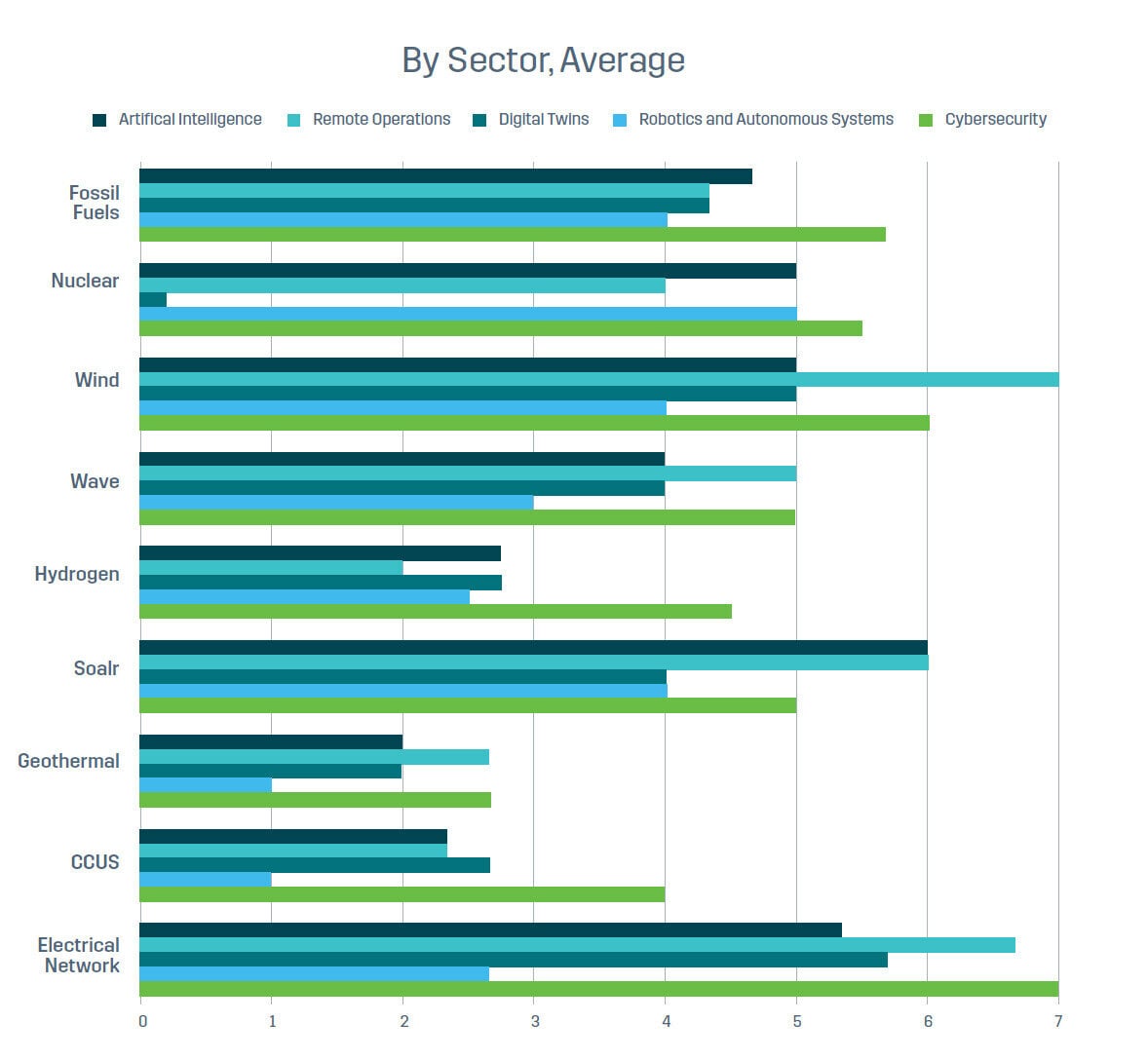
The leading sector for the adoption of digital technology is the electrical network; however, in this sector, deployment of robotics is still in a period of growth. As anticipated, the fossil fuels and nuclear sectors are quite mature, but both wind and solar show higher levels of adoption in some areas.
AI and digital twins more widely adopted in wind, solar, nuclear and fossil fuel sectors, while robotics remains nascent due to reliability
challenges. Cybersecurity emerges as a critical priority across all sectors.
The digital technology adoption levels are generally low in geothermal, hydrogen and CCUS, except for cybersecurity. This corresponds with the low volume of deployed assets in the UK, especially for CCUS and Geothermal.
Organisations looking to navigate this complex landscape can benefit from NZTC’s Technology Assessment Services , which provide independent, data-driven evaluations that help assess risks and uncover opportunities.
UK energy sector adoption comparison
Digital technology performance across sectors
Artificial intelligence
Applications are most advanced in wind, solar, electrical networks, and elements of fossil fuels and nuclear sectors, primarily supporting operations and maintenance, forecasting and grid management. Applications of AI is in its infancy for CCUS, geothermal and hydrogen technologies. The volume of deployed assets has a direct correlation to levels of AI adoption.
Remote operations
Leading adoption appears in electrical networks and autonomous operations like solar and wind. This is in line with expectations given the large, unmanned assets that exist for these sectors. Fossil fuels applications are moving towards remote operations in some areas but are not a widespread adoption.
Digital Twins
Higher adoption levels are found within established sectors, including electrical networks, nuclear facilities and fossil fuel production. Other areas like CCUS and Geothermal are less mature, but the opportunity exists. The terminology encompasses broad simulation and modelling applications, not just physically connected digital twins.
Robotics and Autonomous Systems
This technology shows the lowest adoption across all sectors. The UK ranks lowest in robotics among G7 nations, with only 4% adoption rate in 2023. Reliability challenges in offshore conditions and immature technology readiness levels contribute to limited deployment.
There are some recognised applications in electrical transmission inspections and solar and wind inspections. However, in other areas such as nuclear facilities and fossil fuel applications, the low levels of adoption are a result of the low reliability of the devices.
Cybersecurity
Demonstrates the highest adoption levels across all sectors due to regulatory requirements and critical infrastructure protection needs. The energy sector accounts for 24% of all cyber attacks in the UK in 2024, making robust security measures essential.
For companies evaluating investments in the digital and robotics space, NZTC’s Technology Due Diligence services provide comprehensive technology risk assessments and readiness evaluations, validating claims and benchmarking performance.
Continued investment, collaboration and innovation are needed to achieve the UK’s energy goals and a sustainable future, and the necessary digital transformation of the energy sector is vital for reaching net-zero ambitions and securing an affordable energy supply.
By examining industries like finance and pharmaceuticals, valuable lessons can be learned. Sharing best practices in areas such as upskilling, cybersecurity and data management could help overcome barriers to digital transformation. This would enhance efficiency, lower costs and strengthen the UK’s competitiveness on the global stage.
Learn more about digital adoption in the UK energy sector, international benchmarks and sector-specific challenges.
Related

Subscribe for the latest updates